Your first harvest in Farming Simulator 25
The crop is ready and you're sitting in a combine. Which header, where the grain goes, who gets the straw, and what the field needs before you sow again.
Is it ready
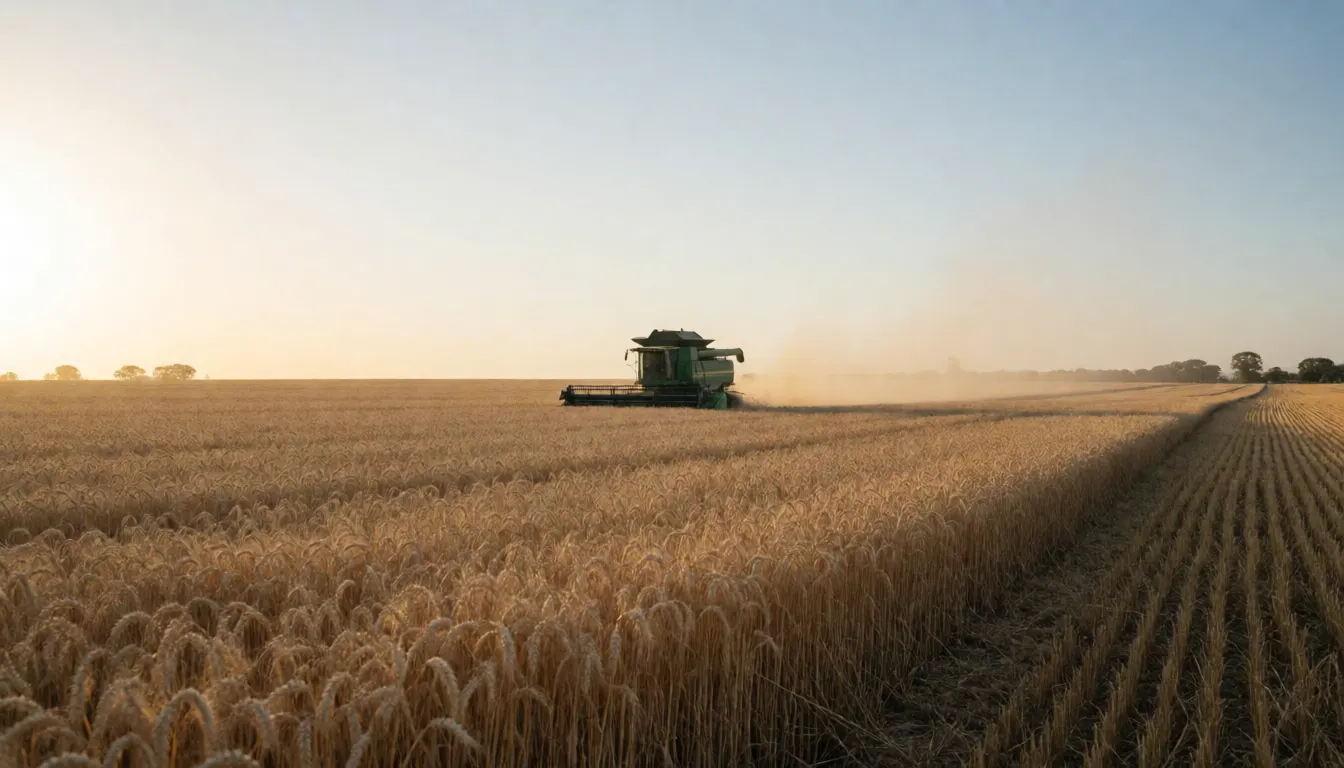
Check the crop calendar before you drive out. A crop that's ready has a harvest window, and skipping time past it can wither the crop. Typical windows for the grains: barley June to July, wheat, oats and canola July to August. Soybeans and sunflowers come in October to November, corn in autumn, and sorghum August to September. Your map and season setting can shift these, so trust the field info on the map over the list.
Keep time at 1x to 5x while you harvest. If you have a harvest contract running, it expires when the month rolls over.
The right header
A combine needs the header that suits the crop. The shop shows the crop icons each header handles, so check before you buy.
- Grain header: wheat, barley, oats, canola, soybeans and sorghum.
- Corn header: corn and sunflowers.
- Special headers and harvesters: sugar beet, potatoes, carrots, peas, cotton, sugarcane and rice each need their own harvester. Potatoes, sugar beet and sugarcane need topping or defoliating first.
- Grass: a mower, not a combine. It regrows after each cut.
If the combine won't cut, check the header matches the crop.
Unloading into a trailer
A combine has a tank. When it's full, unload it into a trailer. Pull alongside with the trailer, or park the trailer and bring the combine to it, then use the unload prompt on screen. A tractor with a trailer working beside the combine lets you keep cutting without stopping, and it's the job an AI helper does well.
A forage harvester is different. It has no tank, so a tractor and trailer must drive alongside it the whole time. That's how you gather chaff for silage, so if one stops harvesting, look at the trailer first.
Where to sell
Open the prices screen to see what each business pays for your crop. Don't sell at harvest if you can wait: the best months differ by crop (wheat and barley around January, canola in December, soybeans in July), and harvest time is usually the worst price.
You can place a silo from the build menu to hold the grain until the price is right. Selling at the sell point is a manual unload from the trailer. If a production building takes the crop, such as a grain mill for wheat, that's another place to send it. See what to plant for which crop goes where.
Straw after cereals
Wheat, barley and oats leave straw. Turn the combine's straw chopper off and the straw drops behind it as a swath you can collect with a baler or a loader wagon. Straw is useful: it's bedding for cows, pigs and horses (they need it to make manure), a TMR ingredient, and it sells. If you aren't keeping animals yet, bale it and sell it, or leave it chopped.
Canola, sorghum, corn, sunflowers and soybeans leave no straw. A forage harvester on them makes chaff for silage.
The field after
Don't leave it as stubble. What you do next depends on the crop.
- Cereals, sorghum, sunflowers, soybeans and corn: mulch the stubble first, then cultivate. Mulching before cultivating is the order that works.
- Root crops: plough after harvest.
- Lime: apply after every third harvest when field info says it's needed, before you plough or cultivate.
- Check field info: if it says the field needs ploughing, plough. Otherwise cultivate.
Then sow the next crop. The field order, with the bonus for each step, is in your first season.